Mistaken Views About the Embargo Act & What They Show Us
Today, I'll explain why the 1807 Embargo Act wasn't so bad, and what the misconceptions about it reveal about America.

When we concluded yesterday’s article, I was explaining why nearly every professional historian considers the Embargo Act of 1807 a mistake and an ineffective policy. (Read the article here.) But I don’t see it that way.
The traditional explanation holds that when America embargoed Britain and France, it hoped to force those empires to respect American commerce by harming their economies, which were already under massive strain due to being at war for the past fifteen years. But that didn’t work because American commerce was not critical enough for either Britain or France to change their approach and accommodate the Americans.
This fact, combined with the damage a national boycott did to the American economy because of the drop in foreign trade, made the Embargo Act a failure. Cementing this argument, seemingly, is that the U.S. ended up at war with Britain within five years anyway.
Now, let me explain why I find this viewpoint lacking.
Nothing about the traditional argument is false. Historians are not conspiring to pull the wool over your eyes. International trade declined. Britain and France did not suddenly have a change of heart and begin respecting American trade as a neutral nation.
But I did some searching to discover how much money the Embargo Act cost the American economy. Some engaged in smuggling to get around the embargo. Sources disagree on how much smuggling took place. And statistics from 200 years ago are not very precise. Think of them as reasonably educated guesses. Therefore, any calculations of the impact of the embargo are also educated guesses rather than hard facts. With that in mind, sources offer a figure of a drop in trade valued between 80 and 90 million dollars, which was something like 5% of the U.S. Gross National Product.
So, to put it succinctly, the U.S. avoided war with Great Britain in 1807 at the cost of 80 or 90 million dollars over fifteen months. It also achieved little diplomatic gain for this economic pain.
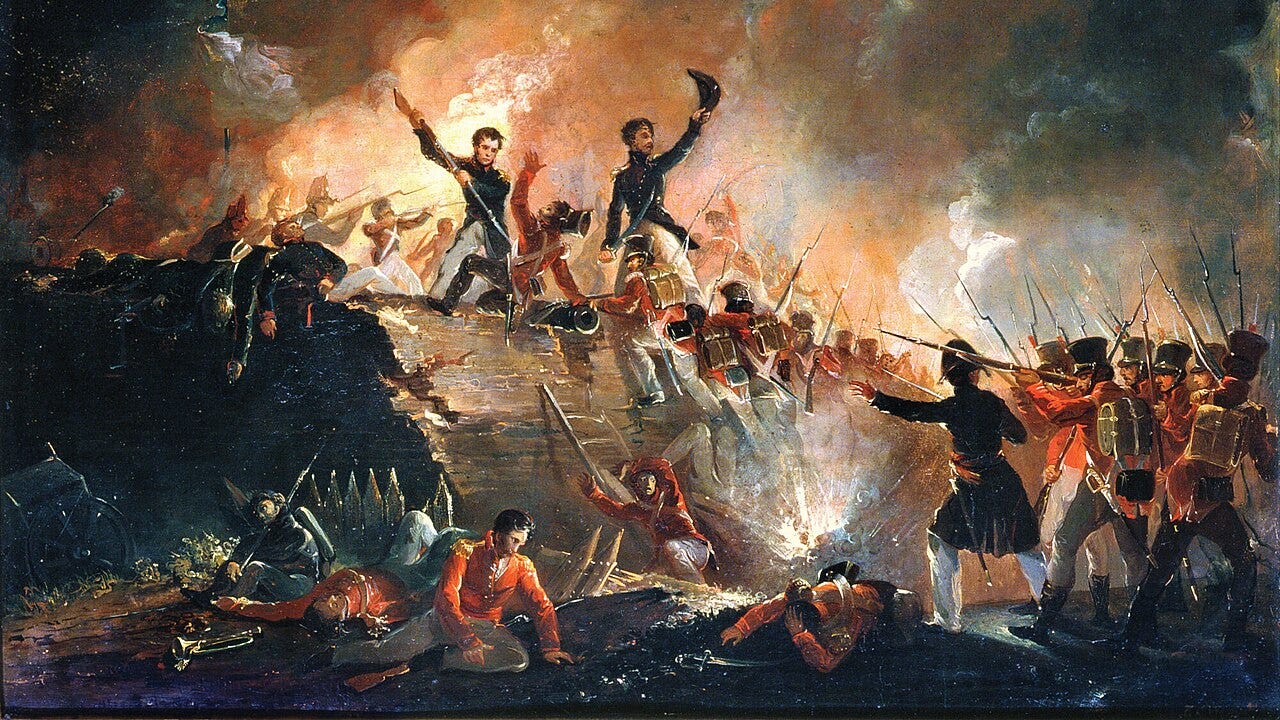
Next, I examined how much it cost to fight the British in the War of 1812. With the above caveats about statistics from the early 1800s, this number appears between 90 and 200 million dollars for a war that lasted about 30 months in diplomatic terms and less in actual fighting.
This leads me, at least, to an interesting conclusion. Using the Embargo Act to avoid war was most likely cheaper than fighting a war in terms of dollars spent or lost. Certainly, it was cheaper in terms of lives lost. The embargo killed no one directly that I know of. Maybe a smuggler or two who got caught and tried to make a run for it. The War of 1812 killed, from all causes associated with the war (death in battle, disease and infected wounds, dying while imprisoned, etc.) about 35,000 combined American, Native American, and British soldiers.
All this for a war the United States really couldn’t win. Because of British naval superiority, the Americans had no ability to invade Britain itself. Once the American plans of conquering Canada and then trading Canada for recognition of our neutral rights floundered at Queenston Heights, the country had no means to defeat Britain in any theater of war. Entering a war without a viable backup plan? History has plenty of examples of how badly that tends to turn out.
Therefore, the War of 1812 also gained little for the United States, diplomatically speaking. Essentially, the Americans and British agreed to turn back the clock to 1812 when they signed the Treaty of Ghent on Christmas Eve of 1814. Britain made few concessions regarding overseas trade—only the defeat of Napoleon rendered this point moot in the years to come.
And, while the Embargo Act drastically reduced American imports from Europe, this had an interesting consequence that, one can certainly argue, was actually beneficial in the long run. Deprived of European manufactures, American manufacturing enterprises sprang up to remedy the shortage. This didn’t improve economic conditions overnight, but in time contributed to the growth of industry in the United States, giving it a more balanced overall economy and making the country less reliant on foreign imports.
Why, then, do most people consider the Embargo Act such a clear failure? It avoided a war, cost less money than fighting a war, and killed no one. Some of its side effects proved useful in the years to come.
My suspicion is that too often, we are trained to think that the fortunes of the wealthy and the U.S. government itself epitomize the experience of all Americans. They lay claim to the “national interest,” and everyone else is supposed to nod, agree, and sacrifice for their benefit. The interests of that small handful of elites is demonstrably not the interests of regular people most of the time. Yet we’re supposed to believe they are, and when someone dares to disagree, they’re clubbed with accusations of being unpatriotic.
Then, we have another of the great manipulative terms in the English language, “national honor.” Our honor was at stake. We had to fight!
It’s questionable whether any phrase has killed more people for less tangible reason in recent centuries. National honor puts no food on your table, clothes on your back, or money in your paycheck, yet you’re supposed to defend it without question. Nor does it bring dead soldiers back to life. We might have had no practicable plan to defeat Great Britain, but we had to fight anyway to preserve our honor? Men in the prime of life had to die so that we could feel better about ourselves?
Incidentally, I also find it amazing how often national honor happens to coincide with the interests of wealthy and influential people, and how rarely they are the ones sacrificing to uphold it.
Finally, WAR!
Who cares if there was no likely way to win. War! Who cares if the sole plan behind fighting the war was to trade territory for neutral rights—meaning the rights of merchants to make more money from Europeans killing each other. War! Who cares that regular people died so that those merchants engaged in overseas trade could profit? War! Who cares if [fill in your perfectly legitimate objection here]? War!
How dare you question war? The American military can never be wrong, and you’re a traitor for suggesting otherwise! War! War! War!
Sorry, got a little carried away there. My sarcasm got the best of me. It happens. I’m working on it. (Also sarcasm, by the way.)
Thanks for reading my take on why the 1807 Embargo Act was not the disaster everyone seems to think that it was. Feel free to comment, as long as you are polite while doing so. I promise to drop the sarcasm in my replies and will not disrespect your views.
I’m curious to hear your thoughts on why War!, national honor, etc. seem to overrule everything else in the minds of many people. Why do so many Americans take these causes as their own without questioning what’s behind these things?
Author’s Note: I do not use any AI when writing my Substack pieces.
If you value in-depth history over opinions on politics or mass-produced AI content, please share & become a paid subscriber. You’ll get several original articles each week on American history. But I need support to validate the effort required to publish consistently. Thank you!
I don't think WAR! fever is limited to Americans. (Britain's Crimean War comes to mind for some reason. Sorry, I'm still on my first cup of coffee this morning.) Testosterone has always played a large part in men coming up with all sorts of excuses to go to war and inspire younger men to feel they have a "legitimate" excuse to murder one another, when all it generally boils down to is money. Who makes the most money selling weapons, manipulating the costs of goods, or oil, or selling "conquered" land. Throw religion in there and you have the double whammy combo of psychological manipulation to stoke support for war. "God is on our side" --each side has always maintained...
Here’s a short answer- historically, this nation was founded by British wannabes, those who gained fame and fortune through conquest. It has been ingrained in every generation since. Americans admire strength and domination. Not so much patriotic, but patriarchal on steroids.
We need the sarcasm! 😉