The Industry So Powerful It Changed Time
This is not a story of a future dystopia, and it does not involve magic, either.

Today I want to share with you how the U.S. got standardized time zones. It was mostly because of one industry.
Americans had a love-hate relationship with railroads in the 1800s. The benefits were obvious. Railroads were the fastest way to move around, they could carry far more cargo than ships or animals pulling wagons, and you could build a railroad to nearly anywhere. Railroads were almost impervious to weather and the seasons, too. No more did farmers dread seeing their wagon bogged down in mud as they slogged to get their crops to market in the fall.
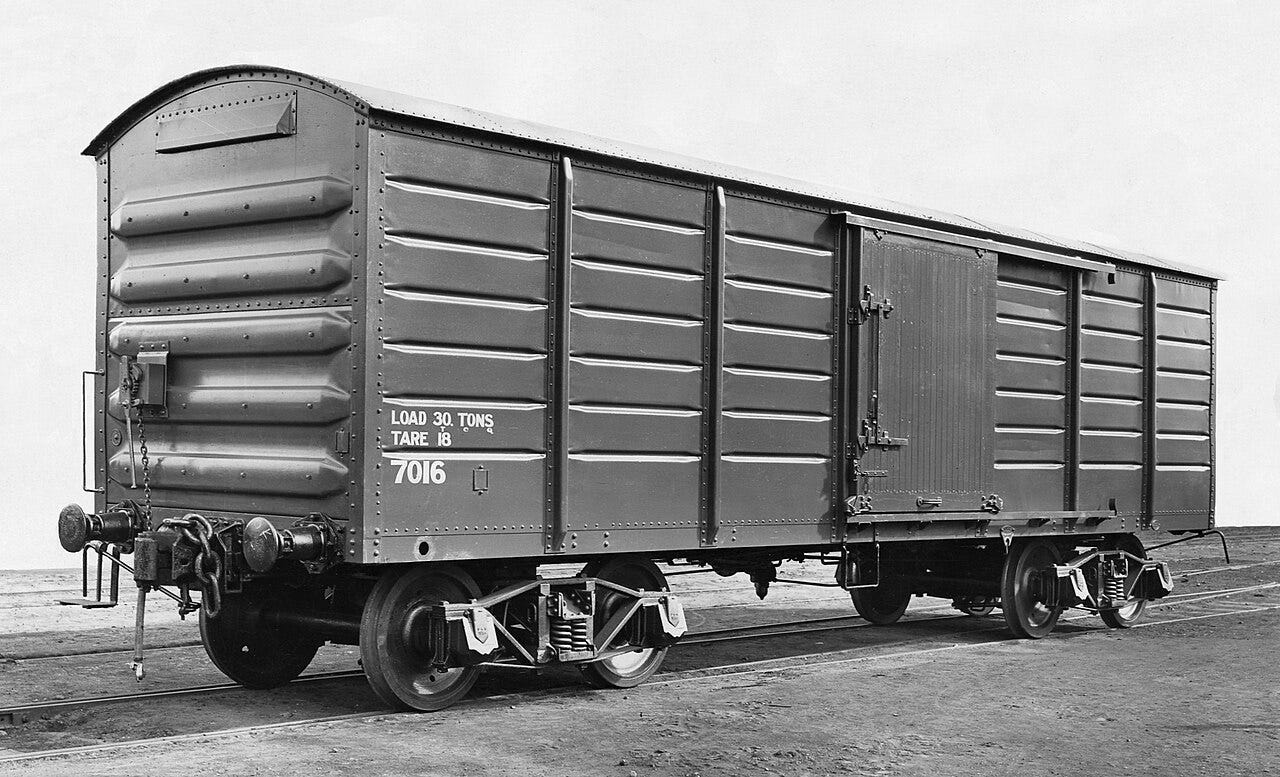
But problems existed alongside these benefits. Places serviced by only one railroad were subject to all the problems associated with monopolies. Most people also realized that railroads were like the tech companies of today, in the sense that their size and wealth gave them great political clout which they did not hesitate to use.
Be that as it may, railroads were also responsible for the standardization of time. Prior to 1883, each city had its own local time, based on the position of the sun in the sky. The following visual will help you see how complex that was! It shows the local time relative to 12 noon in New York City.
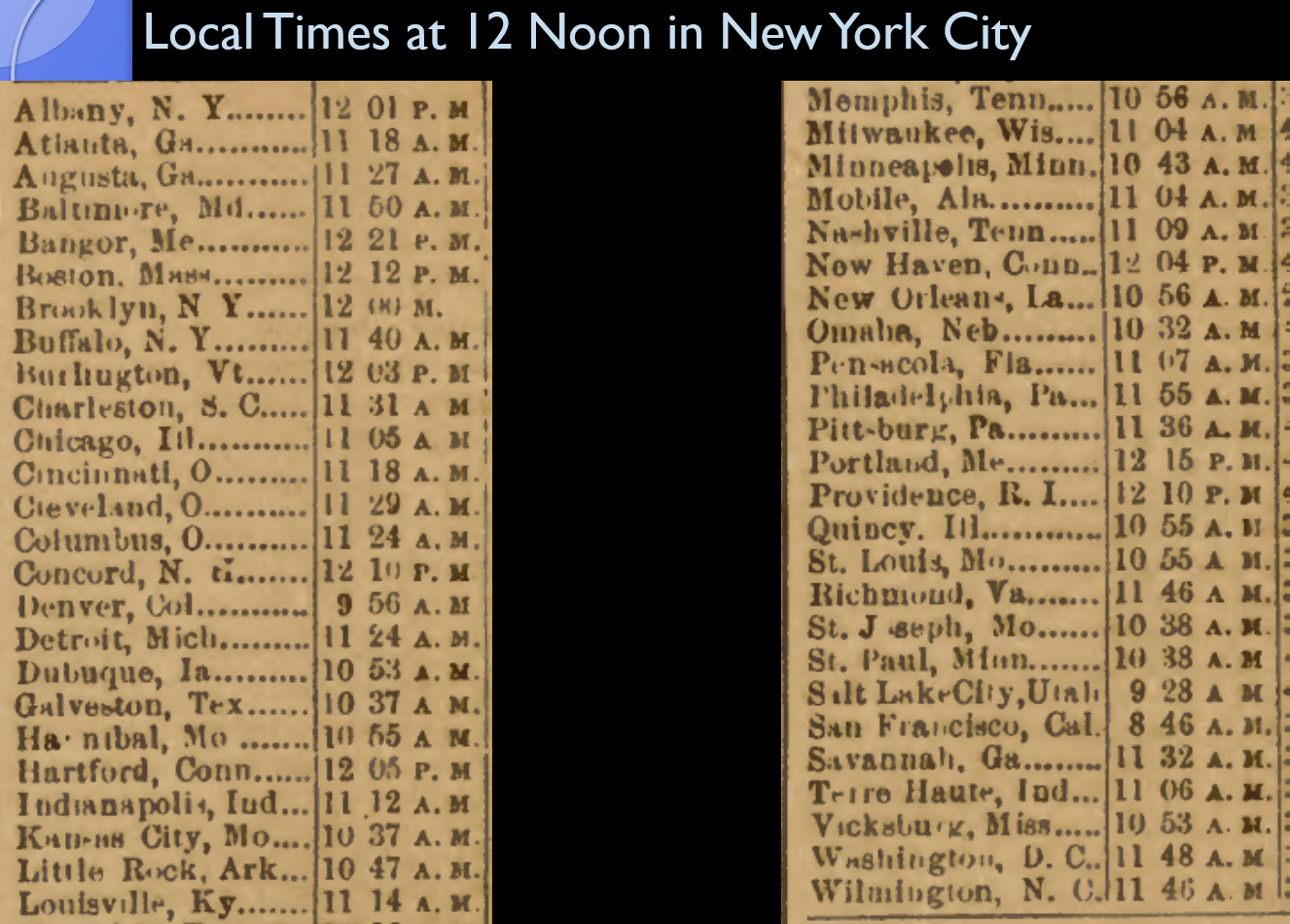
As you might imagine, this made it exceedingly complex for railroads to schedule their routes. Once in a while, two trains ended up on the same track at the same time. More commonly, train depots got snarled with too many cars, causing delays, which further upset attempts at scheduling.
So, on November 18 of 1883, the four time zones of the continental United States went into effect to solve this problem. The whole nation wasn’t obligated to follow (until 1918, at any rate), but most areas did for convenience.
This gives us our explanation of how one industry changed time itself in the United States.
With those who are interested in a dramatic, portrayal of this power, watch the TV series, The Gilded Age.”